
As the food and beverage industry moves through 2025 and 2026, the balance between visual appeal and biological safety is being redefined. Consumer expectations have shifted food colors from a purely aesthetic choice to a core part of clean label strategy and product positioning.
In that environment, plant-based pigments are no longer seen as simple colorants. They are value-adding ingredients that can support brand storytelling, process performance and wellness-oriented product development at the same time. Erkonsantre combines Türkiye’s agricultural strengths with advanced processing to supply scalable solutions for that transition.
Global Food Colorants Market and the 2025-2026 Trend Outlook#
Color remains one of the strongest drivers of perceived freshness, flavor and quality. At the same time, growing sensitivity around synthetic additives has accelerated the move toward fruit- and vegetable-based alternatives across beverage, dairy, confectionery and bakery categories.
The visual language shaping 2025 and 2026 leans toward hues associated with joy, emotional balance, naturalness and premium positioning. Bright yellows, deep reds, dark purples and energetic oranges are becoming the signature palette of clean label formulations.
| Trend Category | Expected Color Palette | Fruit/Vegetable Source (Erkonsantre Solution) |
|---|---|---|
| Emotional wellbeing | Bright yellow and golden hues | Golden beet, lemon, orange |
| Naturalness and purity | Deep reds | Pomegranate, sour cherry, red beet |
| Premium and luxury | Dark purple and burgundy | Black carrot, red cabbage |
| Energy and vitality | Orange and sunlight tones | Orange carrot, grapefruit |
Black Carrot and Anthocyanin Technology: The Most Stable Form of Red#
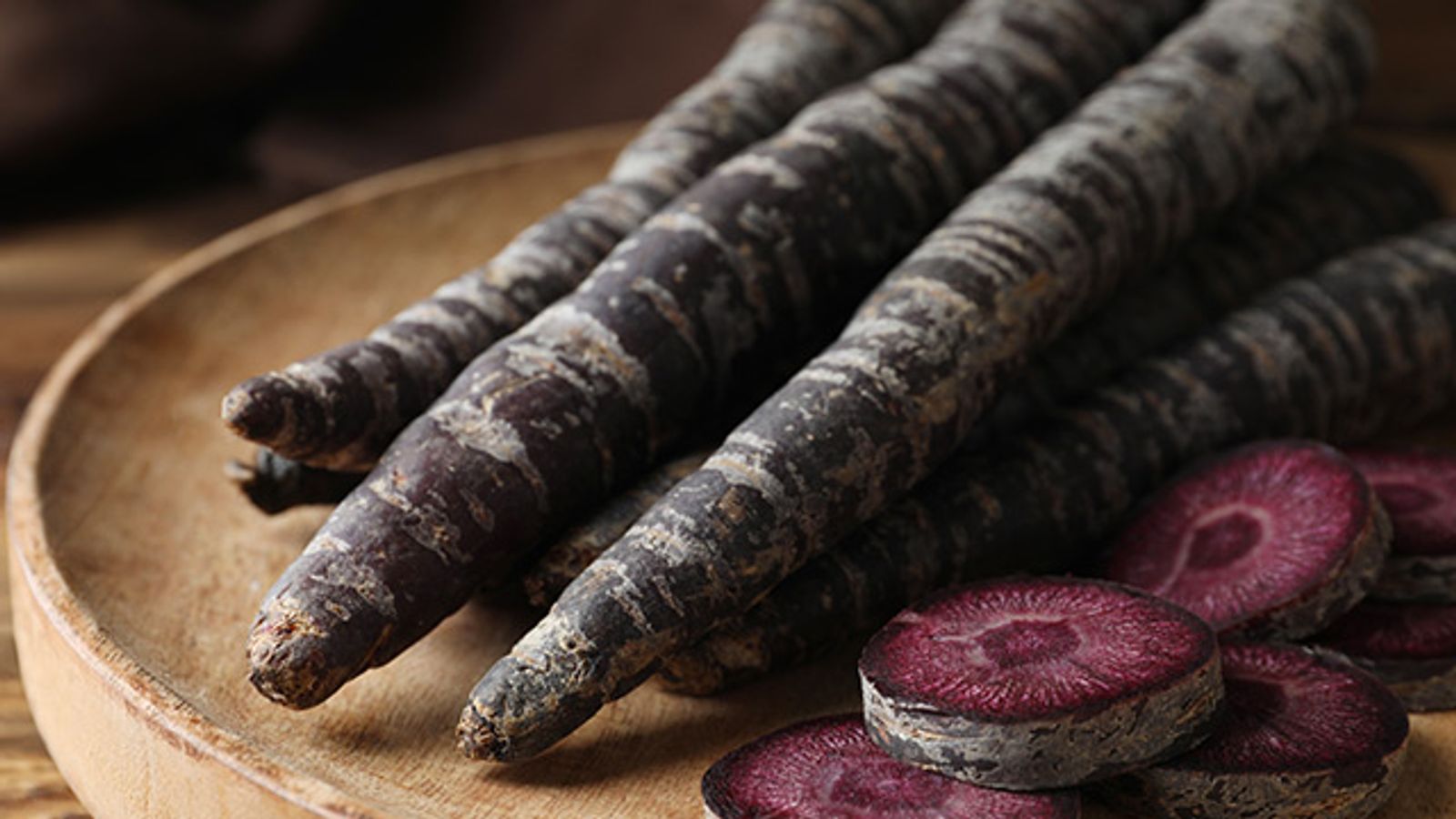
Black carrot is one of the most strategic anthocyanin sources available to food technologists. Erkonsantre’s black carrot juice concentrate, supplied in the 50-72 Brix range, is particularly effective in low-pH beverages, dairy applications and clean label systems that require a stable red profile.
Chemical Stability of Anthocyanins and Their pH Interaction#
Anthocyanins are water-soluble pigments whose color behavior changes with pH. Black carrot stands out because its anthocyanins are structurally acylated, which gives them stronger resistance to heat and light than many fruit-derived red and purple sources.
In acidic matrices these pigments retain a brighter red appearance. When combined with natural acid contributors such as lemon, color retention becomes more consistent throughout shelf life and the finished product maintains a cleaner visual profile.
Black Carrot Powder and Its Industrial Advantages#
Black carrot powder is well suited to dry mixes, bakery systems, premixes and confectionery. Its low water activity supports microbiological stability, reduces logistics costs and enables fast dispersion when rehydrated.
Red Beet and the Biochemical Strength of Betalains#
Red beet is valued not only as a natural colorant but also as a functional ingredient. Erkonsantre’s red beet juice concentrate and red beet powder deliver both intense visual impact and a strong functional narrative thanks to their betalain profile.
Health Potential of Betalains and Their Molecular Role#
Unlike anthocyanins, betalains are nitrogen-containing pigments divided into betacyanins and betaxanthins. Their broader working range between pH 3.0 and 7.0 makes red beet especially useful in low-acid foods, neutral beverages and applications where anthocyanin systems may be less suitable.
Research continues to explore the antioxidant, anti-inflammatory and neuroprotective potential of betalains. That gives red beet ingredients commercial relevance beyond color alone, especially in wellness, performance and functional nutrition categories.
| Pigment Group | pH Stability Range | Heat Sensitivity | Color Range |
|---|---|---|---|
| Anthocyanins (Black Carrot) | 1.0 - 4.5 | Moderate, higher when acylated | Pink, red, purple |
| Betalains (Red Beet) | 3.0 - 7.0 | Relatively sensitive | Red, violet, yellow |
| Carotenoids (Orange Carrot) | 3.0 - 8.0 | Low sensitivity | Yellow, orange |
Golden Beet Juice Concentrate: A New Standard for Yellow and Orange Tones#
Demand for bright yellow and golden shades has moved golden beet into a strategic position. Rich in betaxanthins, it offers a clean label route to warm yellow tones in clear beverages, frozen desserts and other formulations where neutral aroma is important.
NFC Technology and the Pure Fruit Experience#
Erkonsantre’s NFC range is designed to preserve the original character of the fruit as closely as possible. Because there is no evaporation-and-reconstitution step, the natural aroma, texture and overall sensory profile remain closer to the source material.
NFC Portfolio and Key Characteristics#
- NFC Apple Juice provides balance and natural sweetness, making it an excellent base for blended beverages.
- NFC Pomegranate Juice supports premium positioning with its intense sensory identity and polyphenol-rich profile.
- NFC Sour Cherry and Sweet Cherry Juice fit sports and wellbeing concepts thanks to their natural anthocyanin story.
- NFC ABC Juice combines apple, beetroot and carrot in a format aligned with modern wellness programs.
The commercial value of ABC blends comes from complementary sensory and nutritional roles. Apple delivers balance, carrot supports a beta-carotene story and beetroot contributes a performance-oriented profile associated with circulation and vitality.
Concentrate Products: The Basis of Efficiency and Standardization#
In industrial manufacturing, concentrates remain essential for storage efficiency, transport optimization and dosing control. Erkonsantre applies low-temperature vacuum concentration to preserve color quality and flavor while achieving high Brix levels.
Fruit Juice Concentrates and Their Use Cases#
- Pomegranate juice concentrate adds deep flavor and color to sauces, marinades and beverage bases.
- Sour cherry and sweet cherry concentrates help replace artificial color and flavor systems in confectionery and pastry.
- Quince and pear concentrates work as natural sweetening components in baby food and bakery applications.
- Lemon, orange and grapefruit concentrates support acidity management while helping natural colors appear brighter.
ABC Juice Concentrate: The Industrial Form of a Functional Blend#
ABC juice concentrate delivers the benefits of the NFC blend in a more compact format, making it particularly suitable for shots, fruit bars and supplements. It gives formulators flexibility in categories centered on energy, immunity and daily wellness.
Red Cabbage: Excellence in pH-Sensitive Coloring#
Red cabbage anthocyanins are among the most stable natural red-purple pigments due to their highly acylated structure. Under higher-pH conditions they can shift toward blue, making red cabbage an important route for brands exploring natural blue-green effects in confectionery and frozen desserts.
Orange Carrot: The Durability of Carotenoids#
Orange carrot juice concentrate derives its color primarily from beta-carotene. Because carotenoids are oil-soluble and comparatively heat resistant, orange carrot becomes a practical natural alternative when warm yellow-orange tones must survive processing.
Black Tea Extract and Powder: Standardization for Tea Beverages#
Black tea extract and powder help ready-to-drink manufacturers standardize the quality of brewed tea. High solubility, controlled polyphenol content and low sediment formation are especially valuable in clear iced tea applications.
Powder Technology: Next-Generation Solutions for Dry Systems#
Erkonsantre’s powders based on black carrot, red beet, red cabbage and black tea provide a critical technology layer for dry mixes, capsules, tablets and premixes.
- Low water activity helps products remain stable for extended periods at ambient conditions.
- Reduced volume creates meaningful savings in storage and transport.
- Powder format integrates more easily into industrial lines that require precise dosing and homogeneous blending.
Managing the relationship between particle temperature and moisture loss during spray drying is essential. Process expertise therefore matters as much as ingredient selection when commercializing natural colors at scale.
Quality Assurance and the Strategic Role of Certification#
In food ingredient sourcing, trust is now a market-access requirement as much as a quality signal. Erkonsantre’s quality systems, traceability practices and certification framework are central to supplier approval for global brands.
Halal Certification and Global Reach#
Halal compliance is critical in fast-growing regions such as the Middle East and Southeast Asia. It lowers entry barriers and supports broader commercial acceptance in export markets.
ISO and BRC Standards#
Standards such as ISO 22000 and BRC demonstrate that safety, traceability and consistency are managed systematically from raw material intake to final product. That reduces sourcing risk in natural color and concentrate supply chains.
Conclusion#
From NFC juices and high-Brix vegetable concentrates to functional powders and tea extracts, Erkonsantre offers a broad platform for the clean label demands of modern food manufacturing. The stable anthocyanins of black carrot, the versatile betalains of red beet and citrus-based support solutions help brands achieve both color and process confidence.
Success in 2025 and 2026 will not come from creating striking shades alone. It will come from pairing those shades with clean label positioning, functional value and industrial consistency. Erkonsantre’s natural color solutions bring those three requirements together in a single formulation strategy.